
AI Game Generator: Turn Ideas Into Playable Worlds
What if you could describe your dream game in plain English and watch it come to life in minutes? That’s exactly what modern AI game generators promise—and increasingly deliver. Whether you’re a solo creator with a vision, a writer who’s never touched code, or a small team looking to prototype ideas fast, these intuitive tools are reshaping how games get made.
This guide is for solo creators, writers, students, and small teams who want to bring their game ideas to life quickly and easily. AI game generators matter because they lower the barriers to entry, speed up development, and empower creativity regardless of technical background.
What Is an AI Game Generator?
An AI game generator is an online or local tool that converts natural language ideas into playable games, complete with code, assets, and interactive mechanics. Instead of spending months learning programming or design software, you describe what you want—and the AI builds it.
Procedural Content Generation (PCG) algorithms autonomously create game features like landscapes, levels, and items. AI game generators utilize advanced machine learning models to automate different layers of game creation.
Popular AI Game Generators
Rosebud is a free online tool that allows users to turn game ideas into playable games by generating initial code. Ludo.ai offers a Playable Generator for interactive experiences. GDevelop is an open-source, no-code AI game engine for 2D and 3D games. Jabali AI Game Maker enables game creation without coding knowledge. These tools cater to both experienced developers and newcomers.
Here’s how AI game generators compare to traditional game engines:
Factor | AI Game Generator | Traditional Engine (Unity, Unreal, Godot) |
|---|---|---|
Setup time | Minutes (often browser-based) | Hours to days (downloads, configuration) |
Coding required | None to minimal | Extensive (C#, C++, GDScript) |
Learning curve | Low—conversational interface | Steep—requires tutorials and practice |
Asset creation | AI-generated on demand | Manual creation or asset store purchases |
Ideal for | Prototypes, jams, beginners | Production-ready, complex games |
By 2024-2025 standards, modern AI game generators can build: |
2D platformers, shooters, and puzzle games
Simple 3D experiences and environments
Prototype multiplayer and arcade-style games
Visual novels and narrative-driven adventures
Some AI game generators can also create 3D objects, such as characters and items, from descriptive prompts, eliminating the need for traditional modeling.
Imagine typing a prompt like “make a cozy 2D farming sim with day/night cycle” and receiving a playable prototype within minutes. That’s the power these tools bring to the table.
Most AI game generators are accessible directly from your browser—no installs, no configuration. Some offer desktop apps or mobile companions, but the barrier to entry is intentionally low. You sign up, describe your game concept, and start creating.
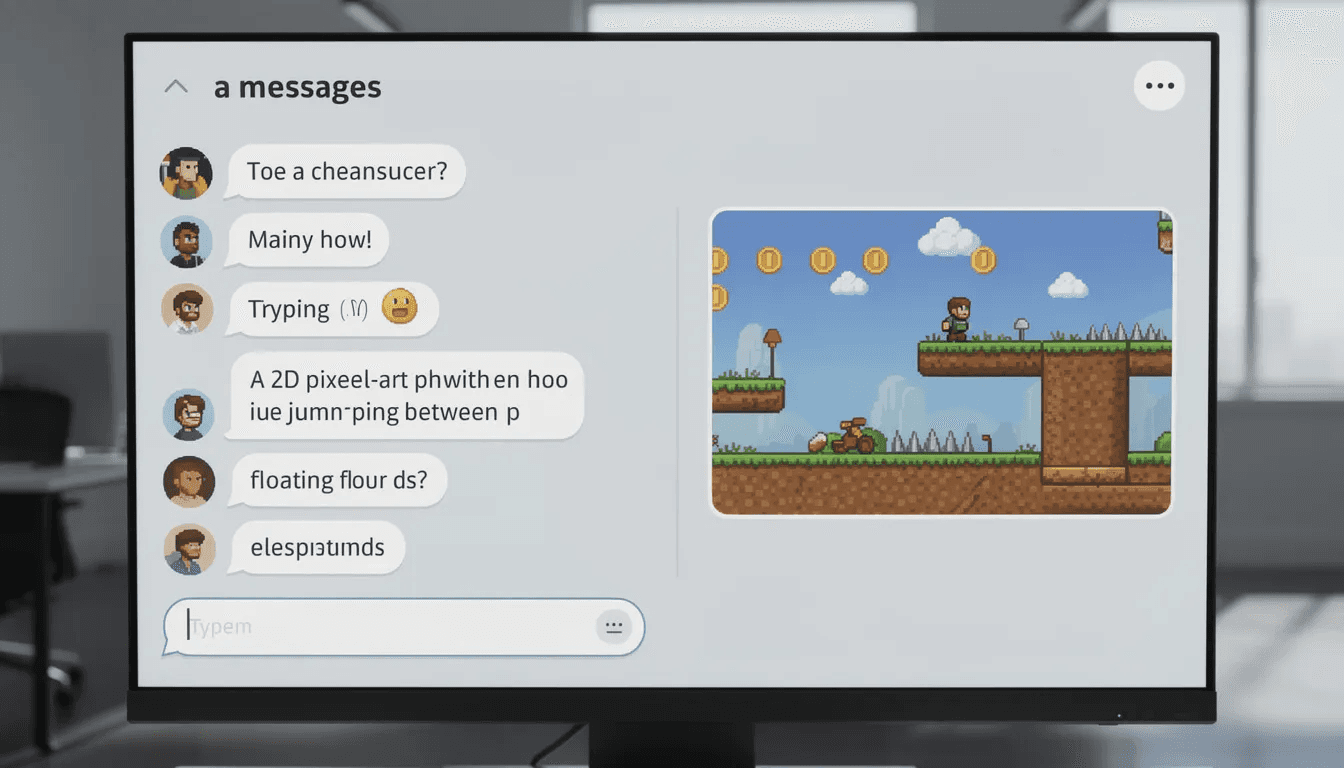
How AI Game Generators Work Under the Hood
Understanding the basic pipeline helps you get better results from these tools. When you type a prompt into an AI game generator, here’s what happens behind the scenes:
User prompt → Language model → Code/asset generation → Live preview
The process starts with your natural language description. A large language model (think GPT-4-class models as of 2024) interprets your intent and generates the underlying gameplay logic, scripts, and dialogue. These models have been trained on vast amounts of code and game design patterns, allowing them to translate “add enemies that chase the player” into functional event systems.
For visual elements, image models like Stable Diffusion or DALL·E-family technology generate sprites, backgrounds, ui elements, and icons. You can request pixel art, cartoon styles, low-poly 3D, or realistic concept art—the AI adapts to your art styles preferences.
The generated code typically runs on established runtimes:
HTML5/JavaScript for web-playable games
Godot-style scene systems for desktop exports
Unity-compatible scripts for more complex projects
Here’s a concrete example of how this works in practice:
Prompt: “Top-down roguelike dungeon crawler with random rooms and three enemy types”
The AI would generate:
A scene system with procedurally connected rooms
Three enemies with distinct behaviors (melee rusher, ranged attacker, boss)
Player controls with WASD movement and attack mechanics
A basic UI showing health, score, and room count
The magic happens in iteration. You can refine your game through conversational edits:
“Make enemies faster and add a health bar”
“Change the environment to a neon city aesthetic”
“Add a power-up that lets the player shoot through walls”
Each request updates the live preview, letting you see changes in real-time without touching code.
Main Features You Can Expect From an AI Game Generator
Modern AI game generators have converged on a core feature set that makes rapid game development possible. Here’s what you can expect from platforms in 2024-2025:
Gameplay Creation
Click-and-drag or chat-driven creation of core loops
Ready templates for platformers, space shooters, tower defense, endless runners, and puzzle games
Visual event systems that respond to your plain-English instructions
AI-Assisted Logic and Events
“If this then that” systems written by AI
Behavior libraries with 100+ reusable components (pathfinding, health systems, inventory management)
The ai assistant suggests mechanics you might not have considered
AI Image Generation
Generate tilesets, character sprites, and cover art on demand
Multiple art styles: pixel art, cartoon, low-poly 3D, realistic concept art
Create stunning visuals without hiring an artist
Narrative Tools
Branching dialogue trees that adapt to player choices
Quest systems with AI-written descriptions and outcomes
Dynamic text that makes each playthrough feel unique
Multiplatform Export
Web (HTML5) for instant sharing
Desktop builds for Windows, macOS, and Linux
Mobile exports for Android and iOS
Platform support for Steam, itch.io, and other launchers
Real-Time Preview
Press play instantly in your browser or editor
Adjust mechanics, difficulty, and visuals on the fly
See changes without waiting for compile times
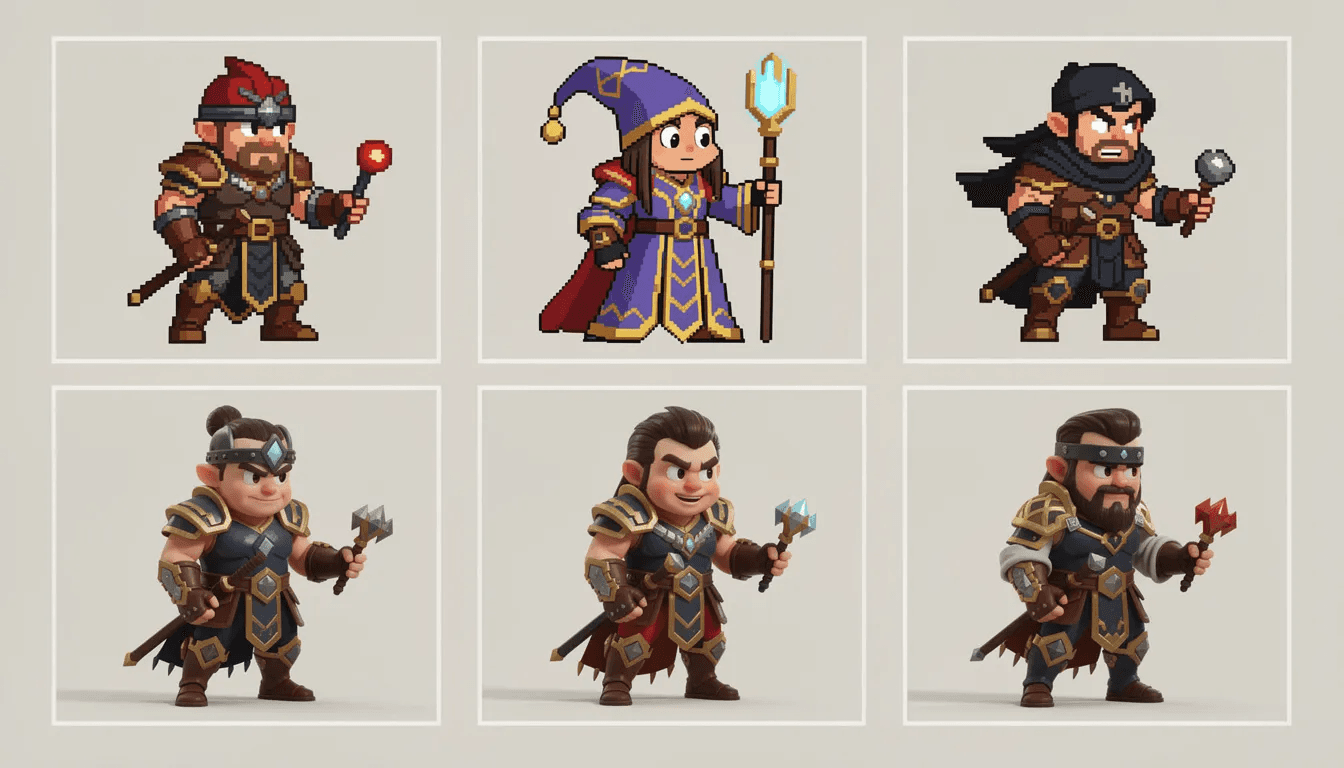
Creating a Game Concept with AI
The journey of game development starts with a spark of inspiration—a game concept that captures your imagination. With modern AI game engines, turning that idea into reality is faster and more accessible than ever. Platforms like Tesana AI Game Maker and Jabali AI Game Maker empower game developers to describe their vision in plain language, and the AI assistant instantly generates a playable prototype. This means you can test your core gameplay, characters, and storylines within minutes, refining your ideas on the fly.
AI tools streamline the game development process by handling the technical heavy lifting. Instead of getting bogged down in code or asset creation, you can focus on what matters most: crafting engaging gameplay, memorable characters, and compelling narratives. The AI game engine can even analyze market data to help you refine your game concept, ensuring your ideas resonate with players. By leveraging these tools, game developers save valuable resources and accelerate the path from concept to creation, making it easier than ever to bring fresh, innovative games to life.
Popular Game Genres AI Generators Can Build
Not all game ideas are equally suited to AI generation—at least not yet. Here are the genres where AI game generators excel, with example ideas you can try today:
Platformers
Endless vertical climbers with procedural platforms and obstacles
Side-scrolling obstacle courses with jumping, dodging, and collecting
Physics-based puzzles with bouncy platforms and gravity mechanics
Include parallax backgrounds and dynamic camera zooms for polish
Space Shooters
Classic wave-based shooters with escalating enemy patterns
Power-up systems (shields, rapid fire, screen-clearing bombs)
Boss fights with attack phases and weak points
AI can tune difficulty based on how players perform
Tower Defense
Grid-based or path-based maps with strategic placement
Multiple tower types: slow, splash damage, single-target
Wave composition that builds tension through pacing
Economy systems for upgrading and unlocking new defenses
Arcade Classics
Pong-like ball games with paddle physics and scoring
Brick breakers with power-ups and level progression
Minimalist loops designed for quick sessions
AI helps optimize ball speed, paddle responsiveness, and point values
Word and Puzzle Games
Timed word guessers with daily challenges where players must guess hidden words using a virtual keyboard within a set time limit, adding urgency and challenge to the gameplay
Physics puzzles with bouncy, toy-like aesthetics
Pattern matching and memory games
AI art models create cohesive visual themes
Narrative-Driven Games
Visual novels with branching story paths
Choice-based adventures where decisions matter
Tabletop-inspired experiences with dice rolls and character stats
AI writes scene variations, character reactions, and multiple endings
Each genre leverages AI strengths differently—procedural generation for endless content, language models for story, and image generation for consistent visuals.
Designing Stunning Visuals with AI Tools
Visual identity is a cornerstone of any great game, and AI-powered game development tools make it easier than ever to achieve stunning visuals. Whether you envision retro pixel art, hand-drawn cartoons, or cinematic 3D landscapes, AI tools can generate a wide range of art styles at the click of a button. You can instantly switch between aesthetics, blend different styles, or even create entirely new looks that set your game apart.
AI-generated content is highly customizable, allowing you to fine-tune every detail to match your vision. The AI assistant can help you perfect character designs, backgrounds, and UI elements, ensuring that every visual element supports immersive gameplay. With these tools, game developers can create visually striking games without needing advanced coding or art skills. The result is a game world that not only looks amazing but also feels uniquely yours—no matter your experience level.
Benefits of Using an AI Game Generator
For solo creators, students, hobbyists, and small studios in 2024, AI game generators offer advantages that were unthinkable just a few years ago.
Speed Going from idea to playable prototypes takes hours instead of weeks. Basic games can be generated within 5-30 minutes. A small team recently delivered a complete game jam entry in a single weekend, using AI to draft mechanics, generate placeholder art, and refine balance—tasks that would have required multiple specialists working overtime.
No-Code Accessibility Non-programmers can launch web-playable games by describing what they want. No C#, no JavaScript, no code at all. The phrase “no code needed” actually means something here.
Creativity Boost Stuck on your next mechanic? The AI suggests variants: “cyberpunk twist,” “gravity reversal,” “winter festival event.” These suggestions help overcome creative blocks and push ideas in unexpected directions. Your creativity drives the vision; AI expands the possibilities.
Lower Costs Compare hiring separate specialists for code, art, and narrative to using a single AI-assisted workflow. For early-stage prototypes and proof-of-concept games, the savings are substantial—especially for newcomers testing ideas before committing resources.
Rapid Iteration and Testing Change difficulty curves, enemy stats, camera behavior, or art direction and see changes instantly. This tight feedback loop accelerates the game development process and helps you find what’s fun faster.
Learning and Education Students can inspect generated logic to understand game design patterns. Educators use these tools to teach programming concepts, narrative design, and interactive storytelling. The generated examples become learning materials.
Collaboration and Teamwork in AI Game Creation
Game development is often a team effort, and AI-powered platforms like GDevelop and Rosebud AI are designed to make collaboration seamless. These tools enable multiple users to work on the same project simultaneously, with the AI assistant helping to coordinate tasks and facilitate communication. Whether you’re focusing on gameplay mechanics, character development, or storylines, each team member can contribute their expertise while the AI handles the technical details.
AI game development platforms offer robust features to support teamwork, including version control, project management dashboards, and real-time feedback. This collaborative environment allows game developers to create complex, feature-rich games with ease. By streamlining the game development process and enabling smooth collaboration, AI tools empower teams to bring ambitious ideas to life—faster and more efficiently than ever before.
Customization and Flexibility in AI-Generated Games
One of the greatest strengths of AI-generated games is their flexibility. With powerful AI tools like Jabali AI Game Maker and GDevelop, you can customize every aspect of your game to fit your unique vision. From gameplay mechanics and character abilities to storylines and level design, the AI assistant offers suggestions and recommendations to help you craft a truly original experience.
These platforms make it easy to edit and refine your game, even if you have no coding background. You can add new levels, introduce fresh characters, or tweak mechanics based on player feedback—all with just a few clicks. The ability to quickly update and modify your game ensures that you can respond to your audience and keep your content fresh. With AI-powered game development, customization is at your fingertips, allowing you to create games that are as dynamic and engaging as your imagination allows.
Limitations and Challenges to Be Aware Of
AI game generators are powerful, but they’re not magic. Understanding current constraints helps you work around them effectively.
Complexity Ceilings Large, content-heavy 3D games with advanced networking, custom physics engines, or deep engine modifications still require experienced game developers. AI excels at prototypes and simpler projects—not AAA production.
Quality Control AI-generated code or event logic can be messy or inefficient. Human review is essential to catch bugs, optimize performance, and ensure the game runs smoothly across devices. Think of AI as a fast first draft, not a finished product.
Art Consistency Keeping a unified art direction across hundreds of ai generated content pieces is challenging. Sprites, backgrounds, and UI elements may drift in style unless you provide specific guidance and curate the outputs carefully.
Narrative Coherence AI can produce contradictions in long branching stories. Characters might forget key plot points or react inconsistently. Human editing and story ownership remain essential for narrative-driven games.
Intellectual Property Avoid prompting for “exactly like [famous franchise]” characters or assets. Focus on original world-building and aesthetics. The industry is still navigating IP questions around AI-generated content, so err on the side of originality.
Dependency on Platforms Browser tools and cloud AI services might change pricing, features, or limits. Always export backups of your projects and code. Don’t let your game live exclusively on someone else’s servers.
The key is treating AI as a collaborator, not a replacement. You guide the direction, review the outputs, and make the creative decisions that matter.
Testing and Quality Assurance for AI-Generated Games
Ensuring your game is polished and bug-free is crucial, and AI game development platforms like Rosebud AI and GDevelop make testing and quality assurance a breeze. These tools come equipped with built-in testing features, allowing game developers to create and playtest prototypes instantly. The AI assistant can automatically identify bugs, suggest fixes, and recommend improvements, streamlining the quality assurance process.
With AI-powered testing, you can quickly evaluate gameplay, graphics, and sound, ensuring a high-quality experience for players. The AI assistant provides actionable feedback and suggestions, helping you refine your game until it’s ready for release. This rapid iteration cycle reduces the time and cost traditionally associated with game development, empowering you to deliver engaging, polished games with confidence.
Real-World AI Game Creation Examples
People aren’t just experimenting with AI game generators—they’re shipping actual games. Here’s how individuals and small teams are already using these tools:
Solo Dev Narrative Game In 2023-2024, a single creator used AI to script dialogue trees and generate encounter variations for a story-heavy sci-fi adventure. The AI handled branching conversations while the creator focused on overall story arc and character development. Time to playable: approximately three weeks for a 2-hour experience.
Game Jam Prototypes 48-72 hour jams have become showcases for AI-assisted development. Teams use AI to:
Draft initial mechanics and gameplay loops
Generate placeholder art that’s often good enough to keep
Rapidly balance difficulty based on playtester feedback
One recent jam winner credited AI with cutting their usual prototyping time by 60%. Some AI-generated games from these jams have even become hit titles within their communities, showing the potential for AI tools to create popular and successful games.
Educational Projects Universities and high schools now include AI game generators in game design curricula. Students explore procedural generation by building platformers, experiment with narrative design through AI-written dialogue, and learn programming patterns by examining generated code.
Marketing and Brand Games Museums, events, and marketing campaigns have used AI to build playable demos without dedicated development teams. A museum exhibit featured an interactive arcade game built by curators with no programming background—they described the vision, AI handled the rest.
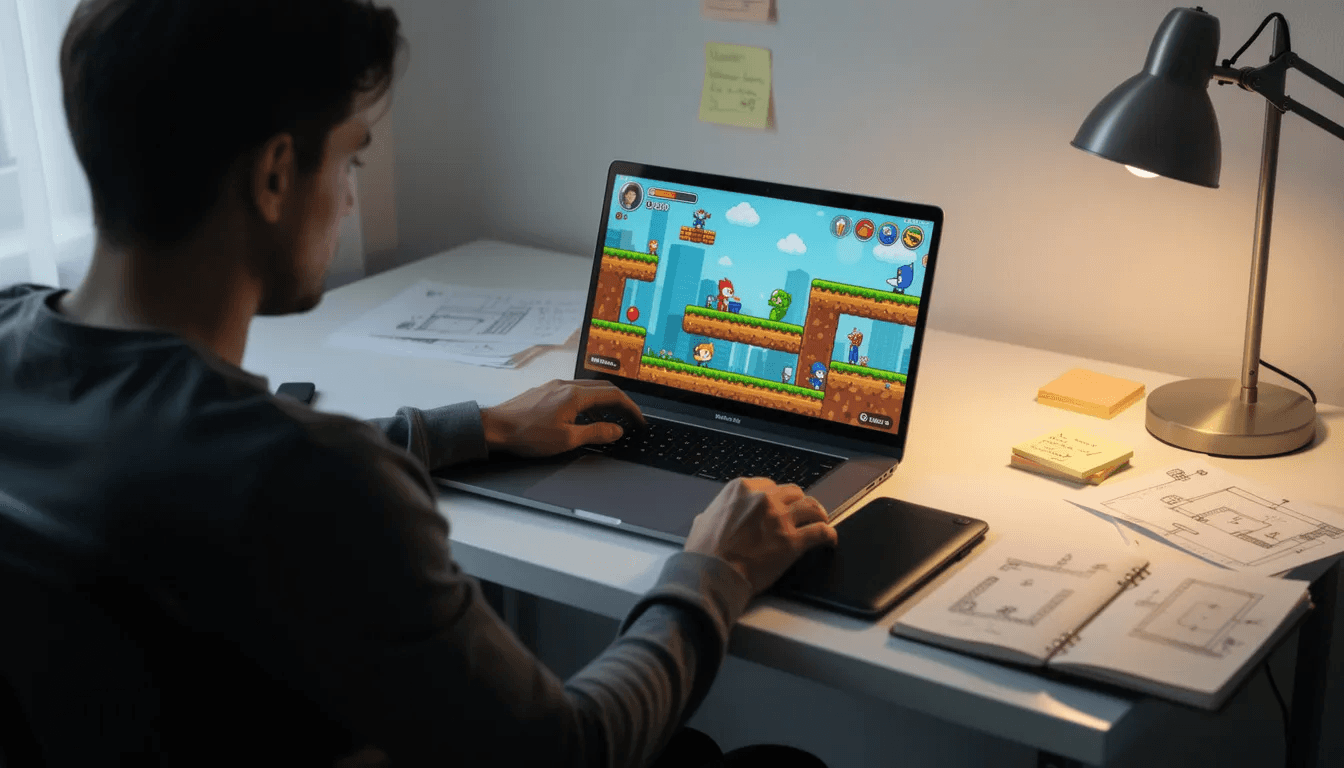
How to Get Started With an AI Game Generator
Ready to create your first AI-generated game? Here’s a practical path for newcomers in 2024-2025:
Step 1 – Define Your Core Idea Write 3-5 sentences describing your game concept. Include:
Genre (platformer, puzzle, shooter, narrative)
Platform target (web, mobile, desktop)
Art style preference (pixel, cartoon, realistic)
Target session length (quick arcade rounds or longer adventures)
Example: “A pixel-art endless runner where players survive an alien invasion by jumping between platforms and collecting power-ups. Sessions last 2-3 minutes. Web-playable for easy sharing with friends.”
Step 2 – Choose a Tool Consider these criteria when selecting your ai game engine:
Browser-based vs. desktop app
No-code vs. low-code (do you want to see/edit scripts?)
2D focus vs. 3D capabilities
Export options matching your goals
Step 3 – Start With a Template Don’t begin from a blank canvas. Pick a prebuilt template—platformer, shooter, puzzle—and iterate with AI requests. This gives you a working foundation to build on and helps you understand the tools’ capabilities.
Step 4 – Iterate Through Chat Ask for specific improvements using natural language:
“Add double jump with a small cooldown”
“Spawn more enemies after 60 seconds”
“Change the environment to a neon city at night”
“Add background music with an electronic feel”
Each prompt refines your game instantly.
Step 5 – Playtest Early Share your game with friends or small online communities. Gather feedback on what’s fun, what’s confusing, and what needs polish. Then use AI to quickly implement requested tweaks. This tight loop is where AI game generators truly shine.
Step 6 – Package and Publish Export to web for instant sharing, upload to itch.io for broader distribution, or build desktop/mobile versions for specific platforms. Your first project might be simple, but it’s complete and playable—a real accomplishment.
Pro tip: Don’t aim for perfection on your first game. The goal is learning the tools and the process. You can always craft something more ambitious next time.
The Future of AI Game Generators
Looking at the 2024-2030 horizon, visible trends point toward even more capable tools—without the hype of science fiction.
Smarter Design Partners Next-gen tools will suggest balance changes, pacing tweaks, and UX improvements based on analytics from test sessions. Imagine your AI assistant telling you, “Players are dying here 80% of the time—consider adding a checkpoint or reducing enemy damage.”
Deeper Simulation and Systems AI will help build emergent economies, NPC societies that interact with each other, and complex crafting systems. These features were previously too time-consuming for small teams. Millions of possible interactions become manageable when AI handles the implementation details.
Multimodal Workflows Voice commands, rough sketches, and hand-drawn level layouts will become standard inputs alongside text prompts. Describe your idea while drawing a quick map, and watch the game generate around your intent.
More Creators, More Diverse Games As barriers drop, more artists, writers, educators, and hobbyists will share deeply personal and experimental games. The industry will see ideas from people who never considered themselves game developers—leading to games we can’t yet envision.
Responsible Use With greater power comes responsibility. Maintaining human authorship, using training data ethically, and clearly communicating to players how AI contributes to each game will matter more as these tools mature. The best creators will use AI to animate their unique ideas, not to replace creative thinking.
AI game generators represent a genuine shift in how games come to life. They don’t replace the craft of game development—they extend what’s possible for people with ideas but limited time or technical skills. The future belongs to creators who learn to collaborate with these tools while bringing their own creativity, judgment, and vision to the process.
The best time to start experimenting is now. Describe your game, generate a prototype, play it, and iterate. Your first AI-assisted game is just a prompt away.